default

2021-03-29 Terrestrial Thermonuclear Fusion

In this Tech For Luddites YouTube video the lady from India explains the drawbacks of ‘terrestrial fusion’. For instance there are only 21 kilograms of tritium in the world. It has to be bred in a [fission] reactor. For an 800 MW fusion plant it will take 125 kg of tritium per year to run a tokamak like ITER. There is a nearly infinite supply of deuterium but the supply of tritium is not sufficient for a fusion reactor. There are several other disadvantages. There will not be a commercial fusion reactor until after 2060. By that time the world will be running on renewables plus battery storage.

She also explains that fusion creates a large quantity of high energy neutrons which go through the metals of the reactor and disrupt the molecular lattice, causing the metal to become brittle. But what I find most alarming is that the superconducting electromagnets needed have a huge amount of stored energy and the superconduction can collapse, what is known as quenching. The electromagnet can explode, so it should be surrounded by a containment vessel just like a fission reactor.

I have personally believed that the costs of the fusion programs exceed their benefits and the billions spent should have been used on building factories for renewables. This just confirms my belief.

BTW the ‘inventory of tritium’ mentioned in the screenshot below comes from the supply that is for thermonuclear weapons. Tritium deteriorates and must be replenished periodically.

https://youtu.be/FrUWoywZRt8

default

2021-03-28 Lavo, Hydrogen

From TSLA group – about hydrogen from my blog previous to this one.

Nick Carrière
Said, “…fundamental flaws with hydrogen vehicles…”

Well, first off ‘converting to AC for a motor’ is necessary for battery EVs, too. But the losses are only a few percent either way.

Said, “Total energy losses are several times higher…”
That is not much of a concern. The losses in ICE vehicles are much higher. But ICEs use fossil fuel, which has a cost that can’t be reduced because it has to be extracted, processed, transported, sold, etc., all by big oil companies.

With green hydrogen, there is no cost for the crude oil, and minimal cost and easy availability of the water and sunlight to make the finished product. And you said there is no infrastructure for transporting hydrogen. That’s not true. There is hydrogen transported by pipeline and heavy transportation all over to make fertilizer. That’s how your food is grown.

But I didn’t say anything about using hydrogen for light vehicles. Hydrogen has its strengths with heavy transportation, trucks, trains and ships. Many diesel engines can be converted to run on hydrogen.

But the Lavo system stores the hydrogen made by electrolysis and then converts it back to electricity with about 50% efficiency. That’s still better than an ICE generator. But efficiency is not so important when the sunlight is free and inexhaustible, and the cost of solar electricity continues to fall to where even Lavo’s 50% efficiency is *cheaper* than battery storage. The expensive part is the Lavo system — much more than a Powerwall.

Here in California we’ve had the Hyundai and Toyota’s Mirai HFCVs for a few years and approaching fifty hydrogen fuel stations with more being built. The carmakers have a huge amount of money invested in HFCV success.

With the heavy transportation and buses the speed of refueling is important and batteries add weight that takes away cargo weight.

But green hydrogen must be substituted for fossil fuels and that’s why Australia is building a massive solar farm and hydrogen generation plant on the northern coast. They’ll be selling the green hydrogen to other countries to replace fossil fuels. This is the path to zero CO2 emissions. Transportation is just a fraction of the total green hydrogen need.

******

A hydrogen powered locomotive. 👍🤗

https://www.facebook.com/632718800/posts/10158898381538801/

default

2021-03-28 Gov’t Should Fund Green Hydrogen Plant

Also on FB group

The govt should fund a plant for electrolyzing green hydrogen from water. This should be able to soak up all the power from renewables that otherwise would be curtailed during off-peak demand times. The whole idea is to get the ball rolling on green hydrogen production without putting load on the grid during peak times. And this funding could be obtained from a tax on gray hydrogen made from natural gas.

Why the government funding? Because the private sector will not fund a business that’s not going to make money. The hydrogen can’t be produced when demand is high, so there will be times (especially in the beginning) where the hydrogen plant will be doing nothing. But as more and more of the total supply becomes solar and wind, the hydrogen production will become less unprofitable and businesses will take on the production.

The pilot plant could be a business, with a guarantee from government that any losses would be government funded. The business would get a power agreement from the independent system operator to obtain the supply of excess power at a cost that is low. That’s where the suppliers that generate have to agree that the excess power will be sold at a lower rate, but at a rate that will cover their costs. This is so that the companies that generate will *not* have constraints on building solar or wind farms that are larger than needed. These farms would normally be limited in size because the increased costs would normally have no guarantee of being recovered due to inability to sell the excess power produced. So another way of viewing this is that the government is covering the risk of building *increased* solar and wind generation that will be needed in the near future to supply the increases in demand for electric ‘fuel’ for EVs.

default

2021-03-28 Everything Will Be Alright

B-)

“Let the Sunshine in”

**********************

Everything Will Be Alright

default

2021-03-27 Batteries Vs. Oil – Transport & Environment

This gives some important differences about well to wheel comparisons of BEVs and ICEVs. BEVs are much more efficient. Document (.PDF) is 2.4 MB.

https://www.transportenvironment.org/publications/batteries-vs-oil-comparison-raw-material-needs

Tags: ,
default

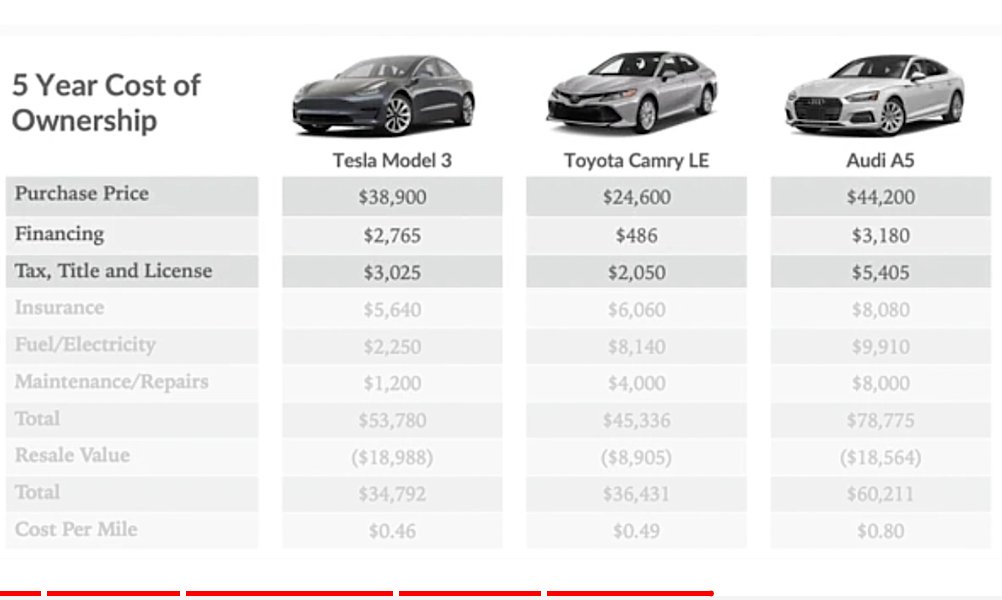
2021-03-27 Tesla, Camry & Audi 5 Year Costs Compared

Something I’ve mentioned: the ‘fuel’ costs for electric vehicles are much lower than gasoline.

Tags: , , ,
default

2021-03-26 Ignorance Is Power

The saying “Knowledge Is Power” has a corollary “Ignorance Is Power.” By this it is meant that politicians have power over people by keeping them ignorant. The politicians use the biased newsmedia to maintain the ignorance by spreading false information. The conflicts between “us” which they claim is the true news, and “them” which they claim is the fake news, forces the people to choose sides and ignore the other side. If the people listen to both sides they become confused and tend to ignore one side in favor of the other, and get very defensive if the person who opposes their viewpoint tries to change their mind. After that it’s most likely friendships will turn into unfriendliness.

default

2021-03-26 11 Million Unauthorized Immigrants

From PBS Newshour 2021-03-26

“60% of the estimated 11 million unauthorized immigrants in the US have lived in the country for a decade or more.”

default

2021-03-26 Old Phone System Decomissioned In Oklahoma

40,000 lines managed by a 10 U manager in a rack. 2 minute video.

https://youtu.be/gpfG5mcPGVk

default

2021-03-26 Breakthrough Liquid Metal Battery – Sadoway & AMBRI

A tutorial about Ambri’s liquid metal batteries

“If you want your battery to be dirt cheap, make it out of dirt!”

– Donald Sadoway

https://youtu.be/2BlyDVb5L3U

LMBs are different. Sadoway says that the designers of Lithium-ion Batteries have to guard against thermal rise; The designers of liquid metal batteries have to guard against thermal fall.

Tags: ,
© RustyBolt.Info/wordpress
CyberChimps